20 July 2026
Should I Use Meta Ads or Google Ads?
Google Ads reaches people already searching for what you sell. Meta Ads puts you in front of people who were not looking. Here is how we choose between them for clients.
If people already search for what you sell, start with Google Ads. If they do not, or if your product is something people want the moment they see it rather than something they search for, Meta Ads (Facebook and Instagram) will usually serve you better. That is the short answer, and it comes down to one distinction: Google captures demand that already exists, while Meta creates demand that did not exist a minute ago.
Most businesses fit one side of that line far more naturally than the other. An emergency plumber lives on Google, because nobody scrolls Instagram hoping to find someone to fix a burst pipe. A garden room company can do well on both, because people search for garden rooms and they also stop scrolling when a beautiful one appears in their feed. We are Seonat, a UK agency, and we manage paid campaigns for businesses across trades, healthcare, home improvement and professional services. This guide explains how we actually make the choice, including the cases where the honest answer is neither.
Google Ads captures demand that already exists. Meta Ads creates demand that did not. Which one you need depends on which of those problems you have.
Two platforms doing two different jobs
The mistake most business owners make is treating Meta and Google as two vending machines for the same product. They are not. They intercept people at completely different moments.
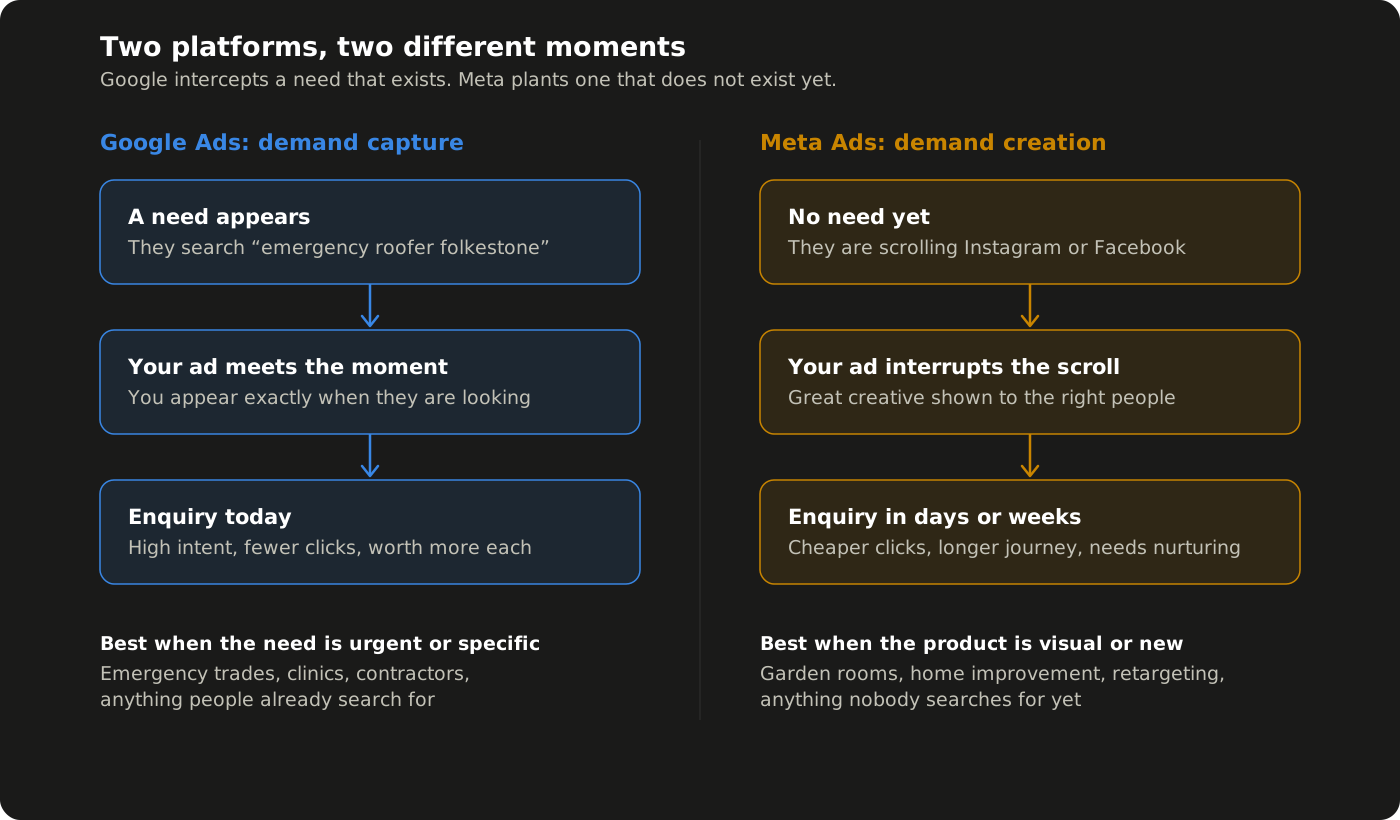
On Google Ads, you bid to appear when someone types a search. The person has a need, they have expressed it in words, and your ad meets them at that exact moment. Intent is high, which is why clicks cost more and why they are worth more. We covered the mechanics of bidding and quality in our guide to what PPC means.
On Meta Ads, nobody is searching for anything. People are scrolling through photos of their friends and their feeds, and your ad interrupts that. Meta's strength is targeting: it lets you put a genuinely engaging piece of creative in front of the right kind of person, in the right area, at scale, for less money per view than almost any other channel. The person was not looking for you, so the enquiry rarely comes the same day. Meta plants seeds. Google harvests them.
When Google Ads is the right answer
Google wins whenever the need is urgent, specific, or already formed. In our experience, Google Ads works better than Meta Ads for emergency and time-sensitive trades like roofing because the customer decides the timing, not the advertiser. When water is coming through a ceiling in a storm, that person searches, compares the top results, and calls someone within the hour. No amount of clever Meta targeting can predict whose roof will fail this week, but a Google ad is standing there when it happens.
The same logic applies to most of the service businesses we work with. Someone researching a private heart clinic, a cesspool emptying service or a diamond drilling contractor has a defined problem and is actively comparing providers. These are searches with money behind them, and the job is to be present, relevant and convincing at that moment.
Google also produces the cleanest maths. One of our home improvement clients invested just over £74,000 in Google Ads across four months and received 3,103 tracked enquiries from it, a cost per enquiry that held between £23 and £25 every single month. We shared the full breakdown in our PPC guide, but the point here is the consistency: search demand is stable, so a well-run search account behaves almost like machinery. Meta can hit numbers like that, but it rarely holds them steady in the same way, because feed advertising depends on creative that wears out and audiences that saturate.
If your customer's need is urgent or already formed, be on Google. You cannot interrupt your way into an emergency.
When Meta Ads is the right answer
Meta earns its place when the product is visual, the purchase is considered, or the customer does not yet know the solution exists. From working with clients in the garden room and home improvement space, we have found that Meta consistently reaches people months before they would ever have typed a search. A homeowner sees a striking garden office in their feed in March, saves the post, shows their partner, and enquires in May. On paper that looks like a slow channel. In reality it started the sale that Google would otherwise have finished for a competitor.
Meta is also the stronger platform when search volume simply is not there. If you sell something new, niche or impulse-friendly, there may be almost nobody searching for it yet, and bidding on the few searches that exist will never produce volume. Creating the demand is the only option, and Meta is the most cost-efficient tool for that job in the UK market.
The third case is retargeting. Meta lets you show ads specifically to people who already visited your website, which is often the cheapest conversion money in the whole account. Someone read your garden room pricing page on Tuesday; on Thursday your finished installations appear in their feed. That warm audience clicks cheaply and converts well, and it works even for businesses whose cold traffic all comes from Google.
The caveat we give every client: Meta enquiries need faster follow-up and firmer qualification. A person who filled in a lead form between two videos is not the same as a person who searched, compared and rang you. In our experience the businesses that thrive on Meta are the ones that call new leads back within minutes and expect to nurture, not the ones that expect every lead to behave like a Google enquiry.
What about cost?
Meta looks cheaper and often is, per click. Clicks and views on Meta typically cost a fraction of what competitive Google searches cost, where UK trades and home services run to a few pounds per click and sectors like legal and finance far more. But cost per click is the wrong scoreboard. The only number that matters is cost per enquiry, and beyond that, cost per job won. A £4 Google click from someone searching "sash window replacement tadworth" regularly beats forty 10p Meta clicks from people who were mildly curious.
The budget also behaves differently. Google spend scales with search volume, so there is a natural ceiling in any local area, and past it you are just bidding up your own costs. Meta spend scales with audience size, which in most of the UK is effectively unlimited, but every audience tires of the same creative. Meta budgets need a steady supply of fresh images and video to keep working. If nobody in your business can produce that, the platform will quietly punish you for it, and that production cost belongs in the real comparison.
The way we actually decide
When a client asks us the Meta or Google question, we walk through three questions in order.
Do people search for this? Five minutes with keyword volume data answers it. Meaningful search volume for what you sell in your area means Google takes priority, because intercepting existing demand is almost always cheaper than manufacturing it.
Is the purchase urgent or considered? Urgent and specific points to Google. Considered, visual and postponable points to Meta, or to both with Meta doing the introducing and Google catching the later searches.
Can you feed the machine? Google needs a fast website, tight keywords and proper tracking. Meta needs those plus a constant stream of genuinely good photos and video. A business with great imagery and a slow sales process fits Meta badly; a business with no imagery at all cannot run it well no matter how good the targeting is.
Run both when the budget genuinely supports it, which for most local service businesses means once Google is already performing and measured. The pairing is powerful because each covers the other's blind spot: Meta builds an audience of people who now know you exist, and Google is waiting when they finally search. But splitting a small budget across both platforms before either has enough data is the most reliable way we know to make both of them fail.
The order matters more than the choice. Capture the demand that already exists before you spend money creating more.
Where to start
Be honest about which problem you have. If customers are out there searching for what you do right now, that demand is being captured every day, by you or by someone else, and Google is where the fight is. If your problem is that nobody knows you exist or nobody searches for what you sell, Meta is built for exactly that.
If you would rather have real numbers than a rule of thumb, we run PPC campaigns across both platforms for UK businesses and we will review your situation for free: your search volume, your market, what an enquiry should cost you, and which platform deserves the first pound. Get in touch and we will tell you straight, including if the answer is that you only need one of them.
Want this working for your business?
Tell us where you are now. We will come back with a clear picture of where you are losing ground online, and exactly how we would fix it.