27 July 2026
What Are Google Local Services Ads? Pay Per Lead Explained
Local Services Ads sit above everything else on Google and charge you per lead, not per click. Here is how they work, who qualifies, and when they beat standard ads.
Google Local Services Ads (often searched as local service ads, or just LSAs) are a separate ad format that sits at the very top of Google, above the standard sponsored results and above everything organic. Instead of paying every time someone clicks through to your website, you pay per lead: a phone call or message from a customer in your area looking for the service you provide. They are built specifically for local trades and services, things like plumbing, electrical work, locksmithing, heating and pest control.
The other thing that makes them different is vetting. To run Local Services Ads a business goes through Google's verification checks, including proof of insurance, and can earn the Google Guaranteed badge, a green tick that tells customers Google will refund them up to a published limit if the work goes wrong. So the short answer is: LSAs are vetted, pay-per-lead adverts that occupy the most valuable space on the search results page. If you run a local service business in a category Google supports, they are usually worth testing before anything else.
Local Services Ads sit above every other result on Google, and you pay for phone calls, not clicks. For qualifying trades, that is the best property on the page.
Where they appear on the page
A search like "boiler repair maidstone" can now return three layers of results, and it helps to see them together.
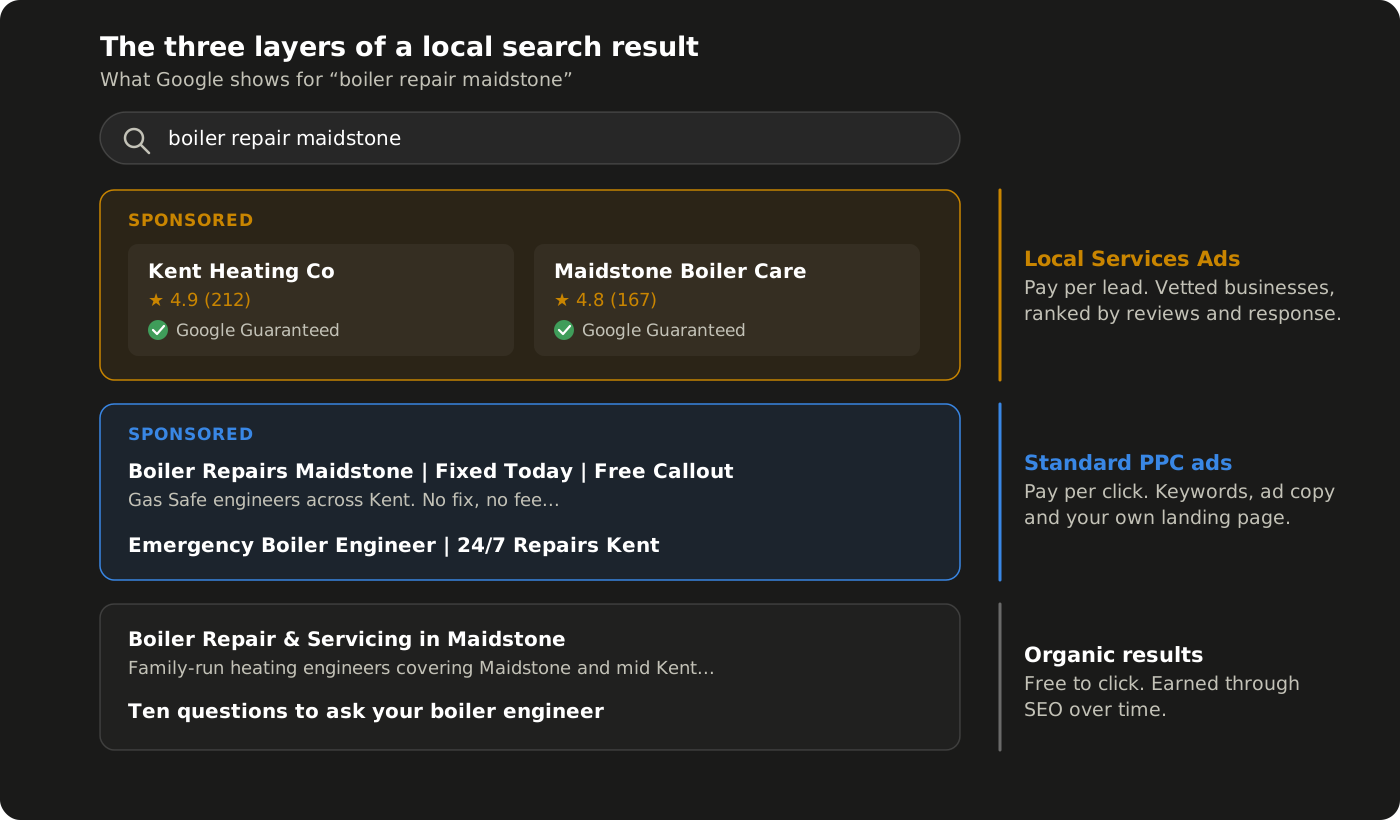
At the top, two or three Local Services Ads show the business name, review score, and the Google Guaranteed tick, with a phone number a mobile user can tap to call directly. Below them sit the standard sponsored results, the pay-per-click ads we explained in our guide to what PPC means. Below those, the organic results that SEO fights for. On a phone, which is where most emergency searches happen, those LSA slots can fill the entire first screen.
Notice what is missing: your website. A Local Services Ad does not send people to a landing page you control. It shows your Google profile, your reviews and your number, and the customer calls you straight from the results page. That is a strength for urgent work and a limitation for anything that needs explaining before someone will pick up the phone.
How you pay: per lead, not per click
With standard search ads you pay for every click, whether that visitor calls you or vanishes. With Local Services Ads, Google charges you when a lead actually arrives: a call you answer, or a message through the ad. You set a rough budget based on how many leads you want in a week, and you can pause it whenever the diary is full.
Lead prices vary by trade and area, and for UK trades they typically land somewhere between £10 and £40 per lead, with emergency categories like locksmiths at the higher end. Compare that with the £23 to £25 per enquiry our home improvement client averages from a well-run standard Google Ads account and you can see the two formats are competing in the same territory. The difference is what you get for the money: an LSA lead is a phone call from someone who saw your rating and pressed call, while a PPC click is a visit to a website that still has to do the convincing.
Not every call is a good lead, and this is the most common frustration we hear. A call from someone outside your area, or asking for a service you do not offer, should not cost you money, and Google credits clearly invalid leads, but the process is not perfect and the odd poor lead slips through. Answering quickly matters too, because missed calls are still leads, and businesses that rarely pick up get shown less over time.
The Google Guaranteed badge
The green tick is the part customers actually notice. To earn it, Google checks the business: insurance documents, relevant licence or registration checks depending on the trade, and background screening run through Google's verification partners. Once approved, your ad carries the Google Guaranteed badge, and Google backs jobs booked through the ad with a money-back guarantee for the customer, up to a limit Google publishes for each country.
From working with trades clients, we have found the badge changes behaviour in a way ordinary ad copy cannot. A homeowner letting a stranger into their house at 9pm wants reassurance more than they want a clever headline, and a Google-verified tick next to a 4.9 star rating provides it. The verification process takes some patience, typically a few weeks of document checks before ads go live, and it is the price of entry rather than an optional extra. Google explains the requirements in its Local Services Help centre.
How ranking works (there are no keywords)
Local Services Ads do not use keywords, ad copy or landing pages. You choose your job categories and the areas you cover, and Google decides when you are eligible to show. Which businesses actually appear, and in what order, comes down to a handful of signals: your review score and how many reviews you have, how close you are to the searcher, how reliably you answer and respond to leads, your business hours, and any complaint history.
This flips the usual logic of paid advertising. In standard PPC, a new business with a good budget and a sharp account can outrank an established competitor on day one. In LSAs, reputation is the currency. The reviews on your profile do the bidding for you, which rewards businesses that have spent years collecting genuine five-star feedback and punishes brand-new ones. Of the twenty five or so UK businesses we manage marketing for, well over half are local trades and services, so we spend a lot of time watching these results pages, and the pattern is consistent: businesses with hundreds of reviews get shown, and businesses with a dozen wait their turn regardless of budget.
In Local Services Ads there are no keywords to buy and no copy to write. Your reviews, your response speed and your proximity are the campaign.
LSAs or standard Google Ads?
The two formats work best for different kinds of work, and most of our trades clients end up needing a view on both. In our experience, Local Services Ads work better than standard search ads for emergency callout work because the customer is not researching, they are ringing the first credible number Google puts in front of them, and paying per answered call fits that behaviour perfectly. For considered, higher-value jobs, a full roof replacement, a rewire, a new heating system, standard PPC campaigns work better, because those customers compare companies before calling and you need a proper website, gallery and quote process to win them, none of which an LSA gives you room to show.
There is also a coverage question. LSAs only exist for the categories Google supports, and the list, while growing, is still limited. A garden room builder or a web design agency cannot run them at all. And within supported trades, lead volume is capped by how many people search: LSAs cannot create demand, only capture it, so they scale to a ceiling and stop.
The catches worth knowing
You surrender control. No keywords, no ad copy, no landing page, no say in when you show beyond your hours and service area. If Google's matching sends you marginal calls, your levers are limited.
Lead quality needs managing. Someone has to answer the phone fast, log which leads were genuine, and request credits on the ones that were not. Treated as fire-and-forget, LSAs quietly bill for mediocre calls.
Reviews decide your fate. If your Google profile is thin, fix that first. A month spent gathering genuine reviews from past customers will do more for your LSA performance than any budget change.
It is one layer, not a strategy. The businesses that dominate local search hold all three layers of that results page: LSAs for the emergency calls, PPC for the considered jobs, and organic rankings that cost nothing per click. Ignoring the other two because the top slot is working leaves the majority of the page, and in our experience the majority of the enquiries, to competitors.
Where to start
Check eligibility first on Google's Local Services Ads page, because if your trade or area is not supported the rest is academic. If you qualify, get the verification started early, keep collecting reviews while the paperwork clears, and decide who answers the phone before the first lead costs you money.
If you would rather have someone map this against what you already spend, we do exactly that for UK trades and service businesses: an honest look at whether LSAs, standard ads, or the combination fits your work, with real numbers on what a lead should cost you. Get in touch and we will tell you straight.
Want this working for your business?
Tell us where you are now. We will come back with a clear picture of where you are losing ground online, and exactly how we would fix it.