21 September 2026
Digital Marketing Results: What We Actually Deliver
The only digital marketing results worth paying for are the ones you can measure: leads, enquiries and sales at a cost you can value. Here is what ours look like, in real anonymised numbers.
When you pay for digital marketing, the only results that count are the ones you can measure: enquiries, leads and sales, at a cost you can set against what a customer is worth to you. Everything else, the impressions, the "domain authority" scores, the rankings for terms nobody searches, is activity dressed up to look like progress. Real digital marketing results are simpler and harder: more of the right people getting in touch, for a price that makes you money.
So rather than tell you we are good at this, we would rather show you. We are Seonat, a UK agency, and across three years and around twenty-five accounts we measure every enquiry in the client's own tools and report on what actually happened. What follows is a selection of genuine results from live accounts we run. Every figure is real and taken straight from Google Ads, Analytics or Search Console. Every client is kept anonymous, because the numbers are ours to be proud of but the names are not ours to share.
Real digital marketing results are not impressions or rankings. They are enquiries at a cost you can value, and they show up in the tools you already own.
Paid ads: spend that pays for itself
The clearest test of paid advertising is cost per lead: what you spend divided by the number of genuine enquiries it brings. Get that right and the maths works at any budget.
One home improvement client we run Google Ads for spends around £18,000 a month. Over the five months from March to July, that came to £91,960, and it produced 3,760 leads, an average of £24.46 each. What we are most proud of is not the total but the consistency: the account never returned fewer than 650 leads in a month, and cost per lead held between £23 and £27 throughout, even as we brought the monthly budget down.
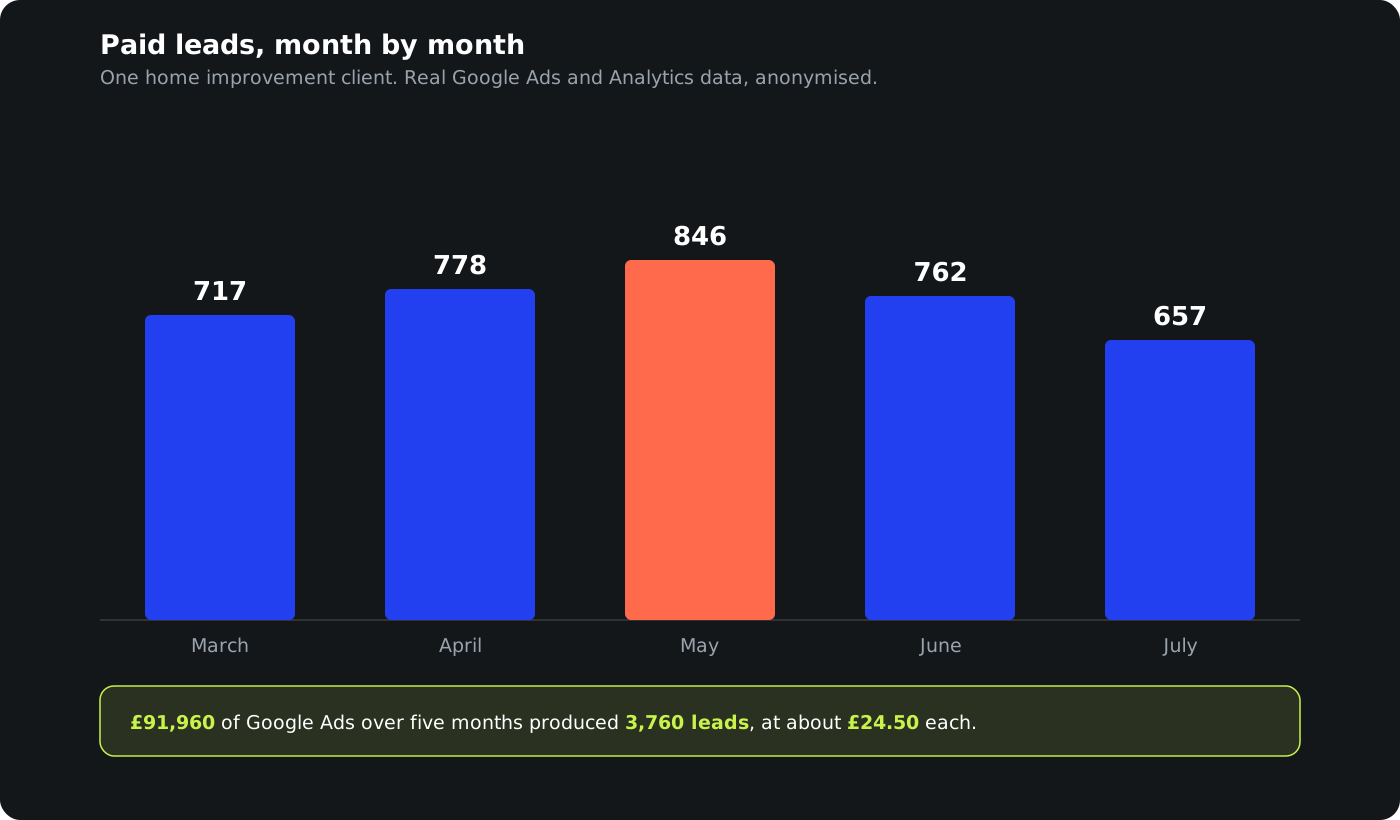
July is a good example of the control that matters. Spend came down for the second month running, to £17,608, and the account still returned 657 leads at £26.80 each, holding its share of the auction even as two national competitors bought more of the premium top-of-page slots. Bringing the budget down without the cost per lead running away is exactly what you are paying an agency to manage.
That steadiness is the point. Anyone can buy a good month by throwing money at the auction. In our experience, judging a marketing agency on cost per lead works better than judging it on clicks or rankings, because a click costs you money whether or not it ever becomes a customer, while cost per lead is the price of an actual enquiry you can put a value on. A campaign that delivers a predictable enquiry at a predictable price is a campaign you can build a business on.
Organic search: growth that compounds
Paid ads stop the moment you stop paying. Organic search is the opposite: slow to build, then it compounds, and the traffic keeps coming without a cost per click.
One client, a private clinic, grew its organic clicks from 71 in a six-month period to 1,172 in the following six, a sixteenfold increase, with impressions climbing from 6,344 to 293,261. It is not a one-off either. We set out the fuller picture, across several accounts and all measured in Google Search Console, in our post on choosing an SEO company in Kent. The pattern across them is the same: real clicks from real searches, growing month on month.
On that clinic account, as on the others, average position drifted slightly while the clicks climbed. That sounds like a step back and is the opposite: the site now ranks for hundreds more searches than it used to, and every new one that enters below the established rankings pulls the average down while adding real traffic. Rising clicks and a drifting average together are the signature of a site widening its footprint, not one losing ground, and it is why we never report a ranking without the clicks and enquiries next to it.
The two disciplines are strongest together. Paid ads buy enquiries today while the organic side earns its momentum, and over time the organic growth reduces how much you need to spend to hit the same numbers.
The website has to convert
None of this matters if the website cannot turn a visitor into an enquiry. It is the quietest part of the job and often the most valuable.
One client's site turned 14.6 per cent of its organic visitors into enquiries in a single month, roughly one visitor in seven. That is what a site built around the enquiry looks like, rather than one built to look pretty and hope. From working with clients, we have found that the fastest win is frequently not more traffic at all, it is a website that converts more of the traffic already arriving, which is why we build websites around a fast, obvious path to getting in touch.
Results at a glance
Pulled together, here is a snapshot of what our marketing delivers, across four different clients.
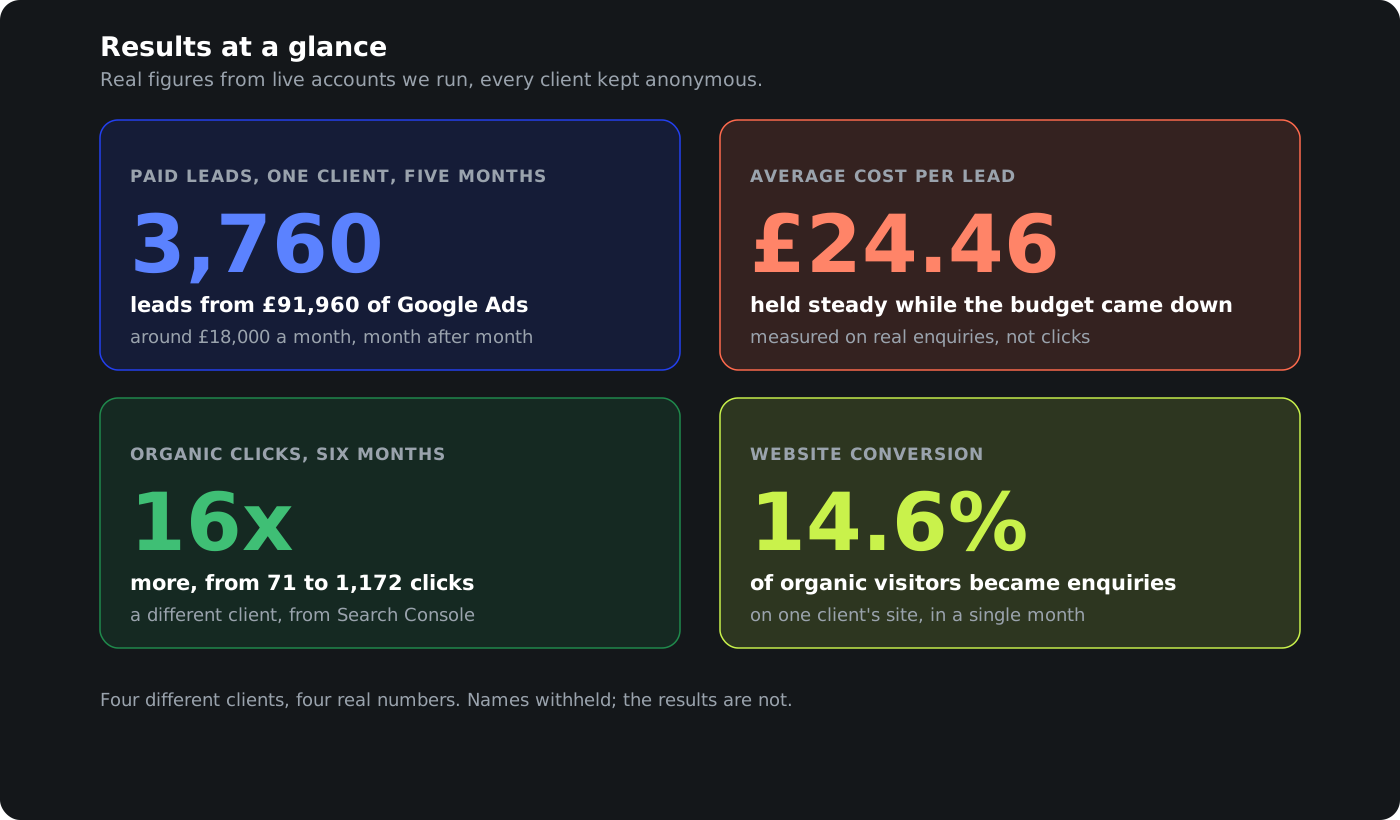
Four clients, four real numbers, drawn from different budgets and different industries. What they have in common is not a trick, it is a method applied consistently: measure the right thing, then improve it.
How we can prove it
The reason we can put numbers on a page is that we measure everything in tools you can check yourself. Enquiries and leads come from Google Analytics, organic clicks from Search Console, and phone calls from call tracking, which matters because in trades and home services most enquiries arrive by phone and go uncounted otherwise. We covered the groundwork that makes this reliable in our guide to conversion tracking on Google Ads.
That honesty cuts both ways. Well-measured marketing sometimes shows that a channel is losing money, and when it does we say so, because a campaign that loses money helps nobody. Google itself makes the same point in its guidance on hiring an SEO or agency: be wary of anyone who guarantees results or hides how they get them. The figures on this page are the alternative, and you can see the same kind of data for your own account in Google Search Console and Analytics.
Where to start
If you already spend on marketing, start with one question: what does an enquiry cost you, and how many did you get last month? If nobody can tell you, that is the first thing to fix, and usually the most profitable.
Then, if you would like results like the ones above, we run Google Ads and SEO for businesses across the UK, and we will review your current numbers honestly, even if the answer is that things are already working. Get in touch and we will show you what real, measurable growth would take for your business.
Want this working for your business?
Tell us where you are now. We will come back with a clear picture of where you are losing ground online, and exactly how we would fix it.